← Home · Investigation

Standard Penetration Testing (SPT) in North Las Vegas – Reliable Soil Data

Together, we solve the challenges of tomorrow.

LEARN MORE →

A recent warehouse expansion off Losee Road hit refusal at 8 feet. The contractor had planned for spread footings. The caliche was thicker than anyone anticipated. Our crew mobilized a CME-75 rig the next morning and ran SPTs at 10 borehole locations across the 4-acre parcel. The blow counts told the real story: N-values jumped from 12 to refusal within 18 inches of entering the cemented layer. That data changed the foundation recommendation to drilled piers socketed into the caliche. In North Las Vegas, the subsurface rarely reads like the textbook. Layers of fine alluvial silts, cemented gravels, and occasional carbonate crusts create a profile that demands field verification. The Standard Penetration Test delivers that verification. We correlate SPT N-values with laboratory grain size analysis to confirm soil classification per ASTM D2487 and give the structural engineer a defensible bearing capacity.

N-values don't lie. In North Las Vegas, they separate the caliche from the clay and save foundations from costly redesign.

Our approach and scope

The Mojave Desert climate shapes everything we do out here. Summer temperatures at our North Las Vegas sites routinely exceed 105°F. That heat bakes moisture out of near-surface soils, altering their apparent strength during shallow exploration. We account for this. Our SPT procedures follow ASTM D1586 with strict adherence to energy calibration. The automatic trip hammer on our rigs maintains consistent 30-inch drop height regardless of operator fatigue. Each split-spoon sample gets logged immediately. We note moisture condition, cementation, and gravel content right at the borehole. For projects near the Las Vegas Wash, we often see interbedded clays with plasticity that surprises engineers unfamiliar with the basin fill deposits. Combining SPT data with Atterberg limits testing clarifies the shrink-swell potential before construction starts.
Standard Penetration Testing (SPT) in North Las Vegas – Reliable Soil Data
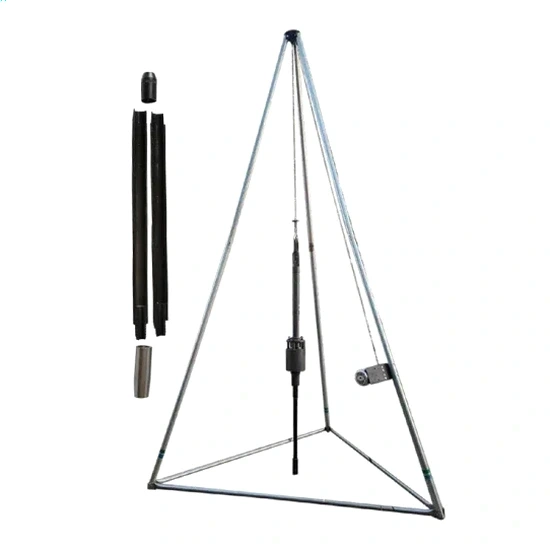
Technical reference image — North Las Vegas

Site-specific factors

North Las Vegas grew fast in the 1990s and 2000s. Subdivisions and industrial parks spread across alluvial fans that nobody had ever tested at depth. The legacy of that boom is a patchwork of soil conditions. One lot might sit on dense cemented gravel with N-values above 50. The adjacent parcel could be underlain by 20 feet of compressible silt deposited by an ancient wash channel. Skipping site-specific SPT investigation means betting the foundation on a neighbor’s geotech report. That bet loses when differential settlement cracks tilt-up panels or rack warehouse racking systems. We have seen it. The IBC requires site-specific investigation for essential facilities. Even for standard commercial projects, the cost of drilling versus the cost of litigation makes the decision obvious.

Need a geotechnical assessment?

Reply within 24h.

Email: info@geotechnicalengineering1.com

Technical data

ParameterTypical value
Hammer TypeAutomatic trip hammer, ASTM D1586 compliant
Borehole Diameter4-inch (NX casing) to 8-inch hollow-stem auger
Sampling IntervalContinuous to refusal or 100 feet depth
Energy Ratio (ER)Calibrated to 60% (N60 reported)
Soil ClassificationField log + ASTM D2487 lab correlation
Typical Depth Range10 to 80 feet in Las Vegas basin fill
Refusal Criterion50 blows over 6 inches or less than 0.1 inch/blow

Complementary services

01

SPT Borehole Drilling

Hollow-stem auger or mud rotary drilling with SPT sampling at 2.5 or 5-foot intervals. Depths to 100 feet. N60 values logged in real time.

02

Foundation Recommendation Reports

Bearing capacity analysis derived from SPT blow counts. Includes settlement estimates and foundation type comparison for shallow versus deep systems.

03

Seismic Site Classification

Site class determination per ASCE 7 using average N-values in the upper 100 feet. Required for structural design in seismic design category D and E.

04

Caliche and Hardpan Evaluation

Identification of cemented layers and refusal depths. Critical for pier socket design and excavation planning in North Las Vegas industrial zones.

Standards used

ASTM D1586 – Standard Test Method for Standard Penetration Test (SPT) and Split-Barrel Sampling of Soils, ASTM D2487 – Standard Practice for Classification of Soils for Engineering Purposes (Unified Soil Classification System), ASCE 7 – Minimum Design Loads and Associated Criteria (seismic site class via N-values), IBC 2021 – International Building Code Chapter 18 (Soils and Foundations)

Common questions

What does an SPT test cost for a standard commercial lot in North Las Vegas?

For a typical commercial building on a 1-acre parcel, expect US$550 to US$650 per borehole when drilling to 30 feet with SPT sampling at 5-foot intervals. A full program with two to four boreholes and a signed geotechnical report generally falls between US$1,500 and US$3,500 depending on access conditions and depth.

How deep do you drill SPT boreholes in the Las Vegas valley?

Most commercial projects in North Las Vegas require 30 to 50 feet. That depth captures the active zone of foundation influence. For taller structures or sites near the Las Vegas Wash, we extend to 60 or 80 feet to satisfy seismic site class requirements per ASCE 7. We always coordinate the exploration depth with the structural engineer before mobilizing.

What happens when you hit refusal in caliche?

We log the refusal depth and note the N-value trend leading into it. If refusal occurs above the planned bearing stratum, we switch to coring or recommend a deeper investigation method. Caliche refusal is common in North Las Vegas at depths between 5 and 25 feet. The data tells us whether to design piers socketed into the caliche or to deepen the exploration to find bearing below it.
Location and service area

We serve projects in North Las Vegas and surrounding areas.

View larger map